Understanding Piedmont Clay Soil in Baltimore
If you own a home or business in Baltimore, you're building on some of the most geologically challenging soil on the East Coast. The Piedmont region, which extends through Maryland and into Virginia, is characterized by dense clay soil that behaves very differently from sandy or loamy earth. This clay is composed of fine mineral particles that compact tightly together, creating a foundation that shifts and moves with seasonal changes in moisture content.
Clay soil expands when it absorbs water and contracts when it dries out. In the Baltimore climate, where spring rains are heavy and summers can be dry, this cycle repeats constantly throughout the year. For homeowners, this means the ground beneath your concrete is literally moving, pushing upward and settling downward with each season. Unlike stable, well-draining soils found in other regions, Piedmont clay creates stress on everything built above it, especially rigid materials like concrete that cannot flex without cracking.
How Clay Soil Causes Concrete Damage in Baltimore
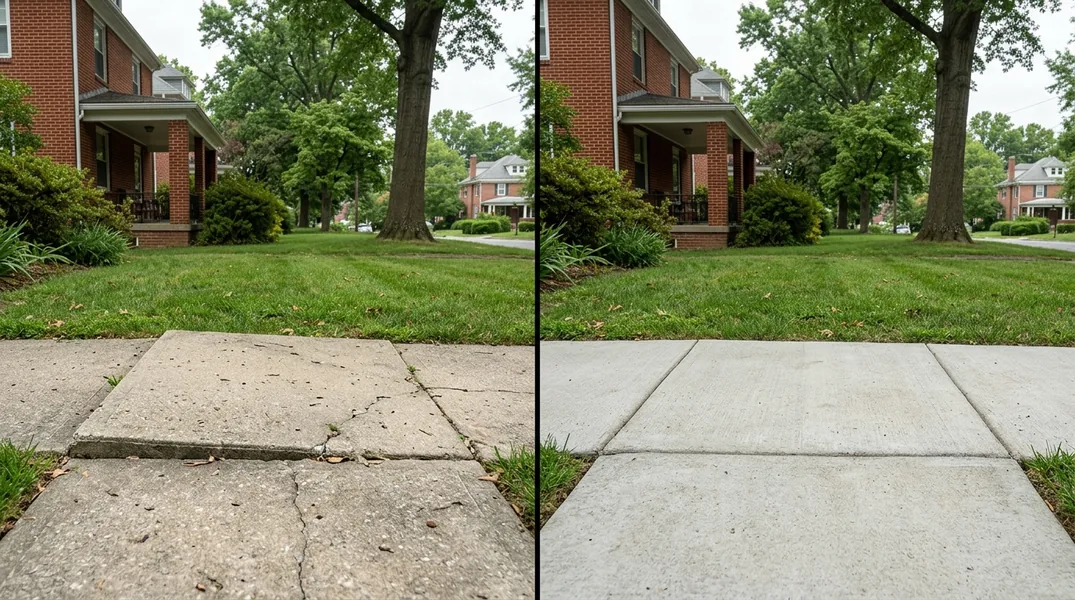
Concrete is strong under compression, but it cannot tolerate the uneven, sustained pressure that clay soil movement creates. When Piedmont clay expands beneath a Concrete Driveways or patio, it pushes the concrete upward unevenly. This heaving can create visible humps, buckles, or raised sections across the surface. Over time, the concrete cracks to relieve this stress. The cracks start small, appearing as hairline fractures, but they widen as the clay continues to move and as water infiltrates the concrete base layers.
The damage pattern you see in Baltimore driveways and foundations is distinctive. Typically, you'll notice diagonal cracks radiating from corners, step cracks along joints, or a general unevenness in what should be a flat surface. Some homeowners report that their driveway has become so uneven it creates a tripping hazard or prevents cars from parking level. This isn't a sign of poor concrete installation, it's a sign that the Piedmont clay foundation beneath is doing what it naturally does. Understanding this helps homeowners recognize that Concrete Repair & Resurfacing often requires addressing the soil issue, not just the concrete surface.
Freeze-Thaw Cycles and Piedmont Clay Foundation Cracking
Baltimore winters compound the clay soil problem through freeze-thaw cycles. When temperatures drop below freezing, any water present in the soil freezes and expands. This expansion is remarkably powerful. Frozen water in clay soil can exert enough pressure to lift concrete slabs by several inches. When temperatures rise above freezing, the ice melts and the soil settles back down, but not always to its original position. After dozens of freeze-thaw cycles across a Baltimore winter, the concrete has been lifted and dropped repeatedly, creating stress fractures and internal damage that may not be visible immediately.
The freeze-thaw damage is especially severe when water has infiltrated concrete cracks and settled in the base layers. In the clay soil beneath Baltimore driveways and Concrete Patios, this moisture becomes trapped and repeatedly freezes. Each cycle weakens the concrete further and deepens existing cracks. By spring, many Baltimore homeowners notice their concrete has deteriorated significantly from just one winter. This is why early free estimate and preventive maintenance are crucial. The sooner you address small cracks and seal your concrete, the longer it will survive the harsh Baltimore climate.
Why Piedmont Clay Foundation Cracking Affects Your Home's Value
Foundation cracks and concrete damage are among the first things potential buyers notice when evaluating a home in the Baltimore area. Because clay soil damage is so common in this region, buyers and inspectors know to look for it. Visible cracks, uneven driveways, or foundation settling can significantly reduce your property's value and make it harder to sell. Even if the structural damage is minor, the cosmetic impact is substantial. A cracked driveway suggests poor maintenance, and foundation cracks raise questions about the home's stability, regardless of whether the damage is truly serious.
The good news is that addressing these issues early prevents them from becoming major problems. Professional Concrete Repair & Resurfacing can restore the appearance and function of your concrete surfaces, protecting your home's curb appeal and resale value. Regular maintenance, crack sealing, and proper drainage solutions all help mitigate the effects of Piedmont clay soil movement. When you invest in proper concrete care now, you're protecting your investment for years to come.
Professional Solutions for Clay Soil Concrete Damage Near Me
If you're dealing with cracked concrete or uneven surfaces in Baltimore, the first step is a professional assessment. Not all concrete damage requires full replacement. Many issues can be addressed through targeted repair, polyurethane injection, mudjacking, or resurfacing. A qualified concrete contractor understands Piedmont clay behavior and can recommend solutions that account for ongoing soil movement rather than treating symptoms alone.
Baltimore Concrete specializes in identifying the root causes of concrete failure in our region. We've worked on hundreds of driveways, patios, and foundations affected by clay soil movement. Our team can assess whether your concrete can be repaired or needs replacement, and we can recommend drainage improvements or soil stabilization techniques that reduce future damage. If you're noticing cracks, heaving, or unevenness, don't wait for the problem to worsen. Contact us at (667) 771-3727 for a free estimate and let's discuss the best solution for your property.
Preventing Future Damage: Maintenance Tips for Baltimore Homeowners
While you cannot change the Piedmont clay soil beneath your home, you can take steps to minimize its impact on your concrete. The most important preventive measure is drainage management. Ensure that water from gutters, downspouts, and surface runoff is directed away from your concrete surfaces and foundation. Standing water accelerates clay soil expansion and increases the freeze-thaw damage cycle. Grading your yard so water slopes away from your home, installing proper downspout extensions, and maintaining gutters all reduce moisture infiltration into the soil.
Second, seal your concrete regularly. A quality concrete sealer fills surface pores and prevents water from penetrating into the concrete and the base layers below. In Baltimore's climate, we recommend resealing every two to three years. Third, fill small cracks immediately. Hairline cracks allow water to infiltrate, and once water reaches the base and soil beneath, freeze-thaw cycles will widen those cracks rapidly. Regular inspection and prompt repair of small damage prevents expensive problems later. If you're considering new Stamped & Decorative Concrete or driveway installation, ask your contractor about clay soil considerations and base preparation techniques that account for ongoing soil movement. The right foundation and installation method can extend the life of your concrete by years.
Looking for a professional tree service in Baltimore? Baltimore Concrete responds fast for all your concrete needs.
Get a Free QuoteOur services: Concrete Driveways · Concrete Patios · Stamped & Decorative Concrete